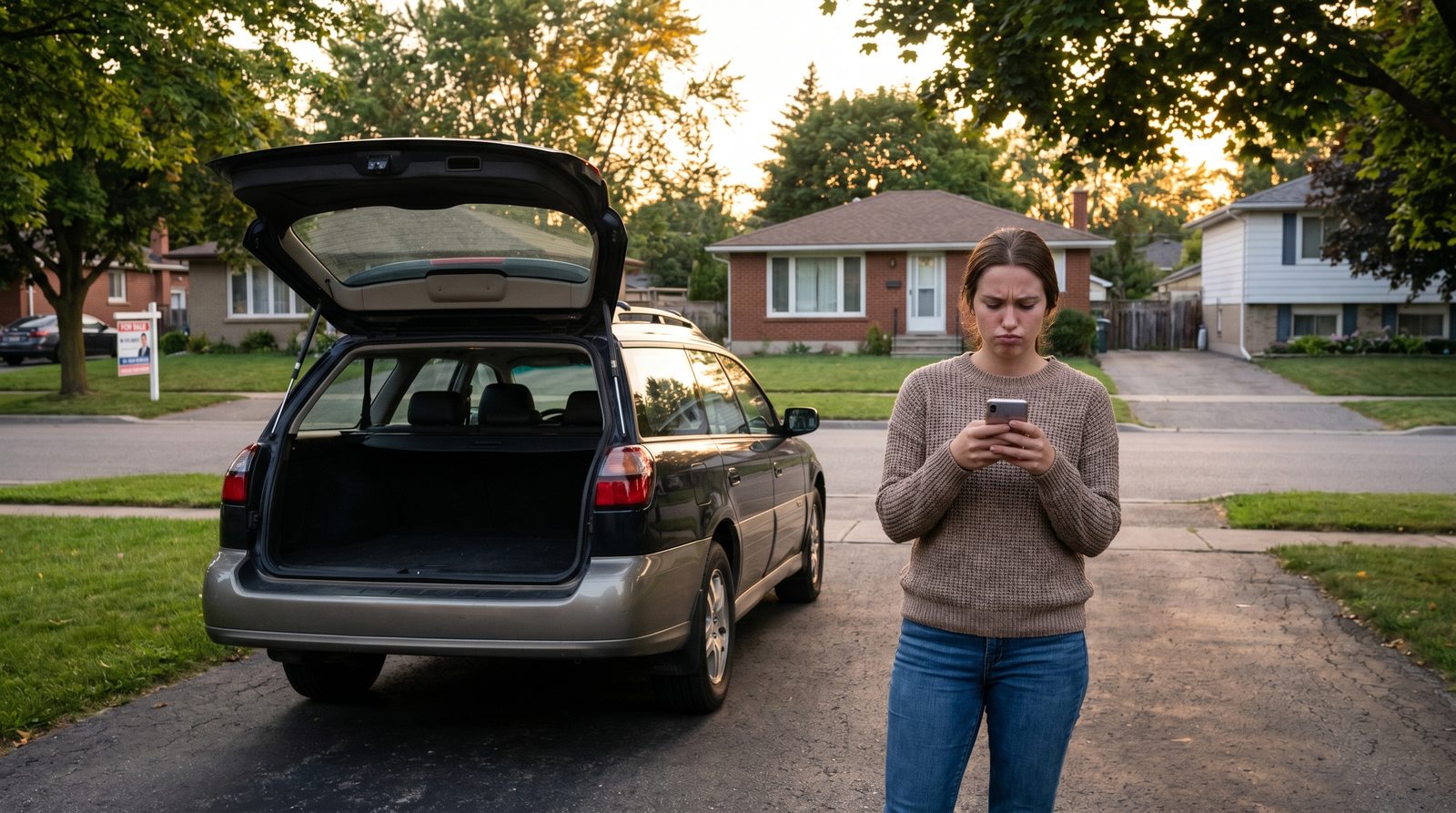
Facebook Marketplace, Kijiji, and Craigslist are great at one thing: connecting people. What they don't do is help you actually complete the transaction safely. No built-in delivery, no payment protection, no verification.
That gap creates real problems: trust issues, coordination friction, safety concerns, and no recourse when things go wrong.
Here are your four main options for managing marketplace deliveries, and when to use each one.
Option 1: Self-Delivery (DIY)
Best for: Small, low-value local items.
You coordinate directly with the seller, agree on a time and location, and pick it up yourself.
Pros: Full control, no fees.
Cons: Time-consuming, safety risks, awkward if anything goes wrong. Not practical for large items.
Tip: If you're meeting someone you don't know, use a public location. Many police stations in Ontario have designated "safe exchange zones" for exactly this.
Option 2: Courier Services
Best for: High-value items going across distances.
Services like Canada Post or Purolator can ship marketplace items with tracking.
Pros: Tracked shipping.
Cons: Expensive, slow (3-7 days), inflexible on timing. Sellers aren't always willing to pack and ship.
Tip: Negotiate who pays shipping before you commit. It's a common point of friction.
Option 3: Peer-to-Peer Platforms (Aerrand)
Best for: Local marketplace transactions, same-day delivery, bulky items.
Aerrand sends a verified Aerrander to pick up and deliver your item the same day. Add Guard to have it inspected against your checklist before pickup.
Advantages:
- Same-day delivery
- Escrow payment protection (you only pay after approving)
- Verified drivers with ratings and history
- No meetups required
Currently in beta in Windsor, Ontario, with expansion underway across other major Canadian cities.
Option 4: Freight Services
Best for: Very large items, furniture, appliances, commercial equipment.
Companies like U-Ship or local movers can handle oversized loads.
Pros: Professional handling capability.
Cons: Expensive, often requires 24-48 hours advance notice, timelines can stretch.
What Each Option Actually Costs You
It helps to put real numbers next to these options instead of just pros and cons:
- DIY pickup: "free" on paper, but factor in gas, your time (often 1-2 hours round trip for anything across a mid-sized city), and the real cost of a wasted trip if the seller no-shows.
- Courier (Canada Post, Purolator): request a current quote for your package and delivery window. Doesn't work for furniture or anything the seller hasn't already boxed.
- Aerrand: priced per delivery based on distance and item size. Add Guard for inspection and escrow. See your price in the app before booking.
- Freight/movers: request a quote based on size and distance, with the longest lead time of any option.
A Quick Example
Say you found a used dresser on Kijiji, 25 minutes away. Driving it yourself costs nothing in dollars but an hour-plus of your day and the risk that the seller flakes. Shipping isn't realistic for furniture. A local moving company can quote for the job and confirm availability. An on-demand peer-to-peer pickup typically lands in between, same-day, with someone else doing the inspection and driving.
Which Option Is Right for You?
For most local marketplace transactions, especially higher-value items or involving strangers, Aerrand provides the best combination of speed, safety, and buyer protection. DIY works for small, simple pickups. Courier for long-distance, high-value items. Freight for anything that won't fit in a van.
The platform you buy from won't protect you. Your delivery method can.